Andrew Mitchem's Strategy Explained (Public-Level Overview)
By The Forex Trading Coach Review Editorial Last reviewed: 7 Oct 2026
Short answer
 Concepts as Andrew Mitchem explains them in his public videos.
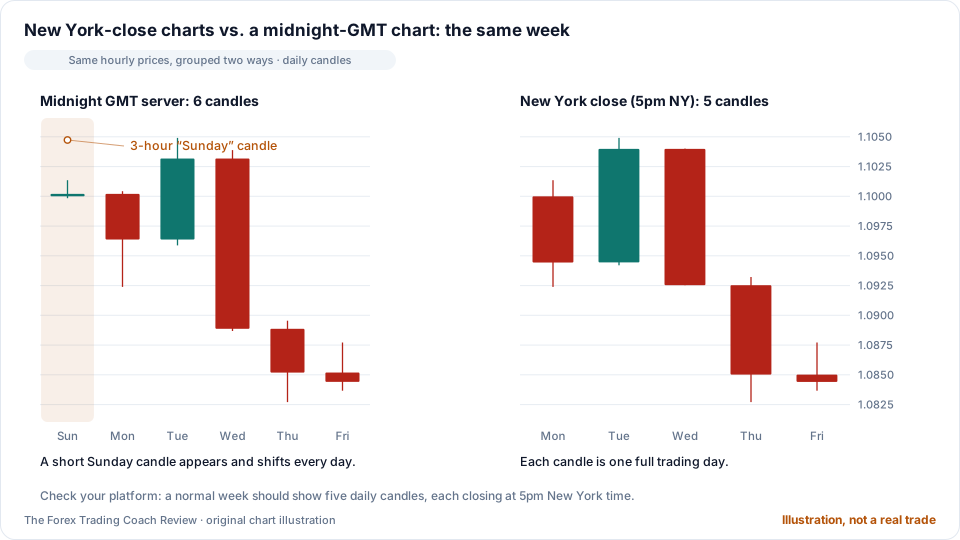
Higher-timeframe charts checked at candle close
Higher-timeframe charts group price movement into longer intervals. Checking at candle close focuses attention on completed candles rather than every price change.
As Andrew explains in his public weekly videos on TFTC's site.
Currency strength and weakness
Currencies can be compared by their relative strength or weakness. This provides broad market context rather than a promise about the next move.
As Andrew explains in his public weekly videos on TFTC's site.
Candlestick patterns at key areas
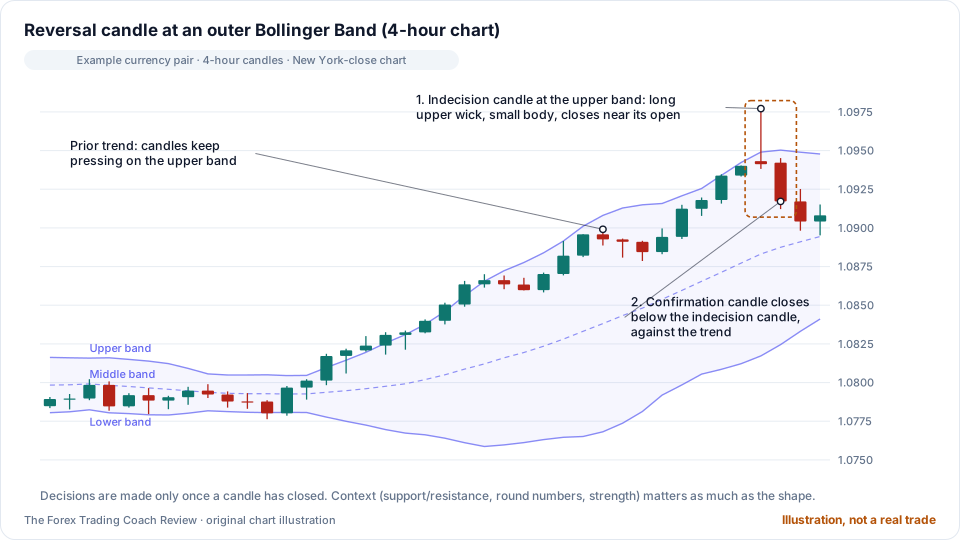
Candlestick patterns describe how price moved within an interval. Considering them at key chart areas adds context rather than treating a shape in isolation.
As Andrew explains in his public weekly videos on TFTC's site.
Bollinger Bands for context
Bollinger Bands describe price relative to a surrounding band. They can provide volatility context without being a complete decision system.
As Andrew explains in his public weekly videos on TFTC's site.
Fibonacci for planning
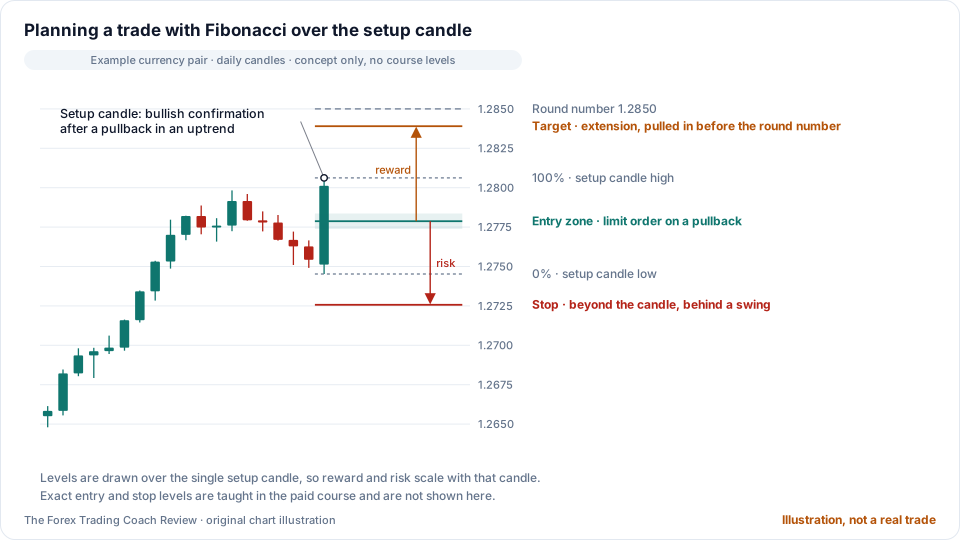
Fibonacci is a chart-planning concept based on ratios. It is one part of planning, not a prediction of a certain result.
As Andrew explains in his public weekly videos on TFTC's site.
Small fixed-percentage risk
Percentage risk relates the amount at risk to account size. Keeping that percentage small puts loss limits at the centre of planning.
As Andrew explains in his public weekly videos on TFTC's site.
Set-and-forget
Set-and-forget describes planning a trade before leaving it to run. It does not remove market risk or mean hands-off income.
As Andrew explains in his public weekly videos on TFTC's site.
Sources and verification
- • The Forex Trading Coach public sales pages and course descriptions
- • Andrew Mitchem's public YouTube videos, podcast appearances and blog posts
We do not reproduce paid lessons, private downloads, member screenshots or protected methodology.